
Entryway Storage Ideas for Small Homes That Work in Real Life
Good entryway storage ideas for small homes start with one honest fact: your front door is the busiest spot in the house, and it probably has the least storage. Shoes pile up, coats slide off a single hook, keys vanish, and the mail lands wherever there is a flat surface. It is not that you own too much. It is that the entryway has no system, so everything that comes through the door stays right where it landed.
The fix does not require a remodel or a mudroom addition. The best entryway storage ideas for small homes work with the space you already have — a wall, a corner, or even just the back of the door. A few hooks at the right height, a bench or basket for shoes, and one small spot for keys can change the whole feeling of coming home. Before you buy anything, stand at your front door and watch what actually happens. Where do shoes land? Where do coats go? What do you reach for on the way out? Those answers are your shopping list, and these ideas work best when they are built around your real habits.
Table of Contents
- Why Small Entryways Get Messy So Fast
- Entryway Storage Ideas for Small Homes: The Landing Zone
- Entryway Storage Ideas for Small Homes: Shoes Without the Pile
- Entryway Storage Ideas for Small Homes: Coats, Bags and Keys on the Wall
- Entryway Storage Ideas for Small Homes: Benches, Baskets and Slim Furniture
- Entryway Storage Ideas for Small Homes: Renter-Friendly Fixes
- Entryway Storage Ideas for Small Homes: Final Checklist
- Frequently Asked Questions
Why Small Entryways Get Messy So Fast
A small entryway fails for a simple reason: it has to do too many jobs in too little space. It is a coat closet, a shoe rack, a mail station, a key holder, and a pet supply cupboard, all squeezed into a few square feet by the front door. When there is no designated spot for each job, every item competes for the same floor and the same hook, and the mess grows every single day.
The second problem is the “drop and run” habit. You come home tired, hands full, and the easiest place to put things down is the floor right inside the door. Without a bench to sit on, shoes come off wherever you are standing. Without a hook at arm’s reach, a coat lands on the nearest chair. That is the real secret: make the tidy choice the easy choice. A basket right where shoes come off beats a closet down the hall, and a hook at shoulder height beats a hanger in a bedroom closet. When putting something away takes two seconds, everyone in the house actually does it.
Before you shop, measure the space. A standard bench is about 18 inches deep, which can block a narrow hallway, so keep at least 30 inches of clear walkway. Count what needs a home — shoes, coats, bags, keys, mail — and set a budget. Most of these ideas cost under $50, and several cost nothing at all.
Entryway Storage Ideas for Small Homes: The Landing Zone
Every good entryway needs a landing zone: one small area where the things you carry in and out of the house always live. The landing zone is the heart of all entryway storage ideas for small homes, because it stops clutter from spreading into the rest of the house.
The simplest landing zone is a small shelf or tray on the wall by the door, with a hook or two below it. Keys go in a small dish or on a hook, mail goes in a tray or a wall pocket, and sunglasses and wallets go in the same spot every day. It takes five minutes to set up and saves you the daily hunt for your keys.
If you have a little more wall space, a narrow floating shelf with hooks underneath does double duty. The shelf holds a small basket for mail and a dish for keys, while the hooks hold coats and bags. Floating shelves are one of the most flexible entryway storage ideas for small homes because they add storage without taking up any floor space at all. If you want to build your own, our guide on how to build floating shelves walks through the whole project step by step. For families, give each person a hook and a small labeled basket — kids put their own backpack on their own hook when there is a hook with their name on it.
Entryway Storage Ideas for Small Homes: Shoes Without the Pile
Shoes are the number one entryway problem in small homes. They multiply fast, they take up floor space, and a pile of shoes by the door is the first thing every visitor sees. The best entryway storage ideas for small homes treat shoes as a system, not a pile.
Start with a limit. In most small homes, two pairs per person at the door is plenty: the pair you are wearing today and one backup. Everything else belongs in a bedroom closet or a storage box. A simple house rule — “two pairs at the door” — does more than any shoe rack, because it stops the pile from growing in the first place.
For the shoes that stay, a low shoe rack or a pair of baskets under a bench keeps them contained and easy to grab. Open baskets work well because you can toss shoes in without lining them up neatly, and a boot tray underneath catches mud and snow in winter and protects the floor all year round. If floor space is very tight, go vertical: a narrow, tall shoe cabinet with tilt-out compartments holds eight to twelve pairs in a footprint only a few inches deep. And if you enjoy a weekend project, our guide on how to build a simple shoe rack shows how to make a sturdy rack that fits your exact space.
Entryway Storage Ideas for Small Homes: Coats, Bags and Keys on the Wall
Walls are free real estate in a small entryway, and hooks are the cheapest way to use them. A row of sturdy wall hooks at shoulder height holds coats, bags, backpacks, and dog leashes without taking up a single inch of floor. This is one of the oldest entryway storage ideas for small homes, and it still works because it is so simple.
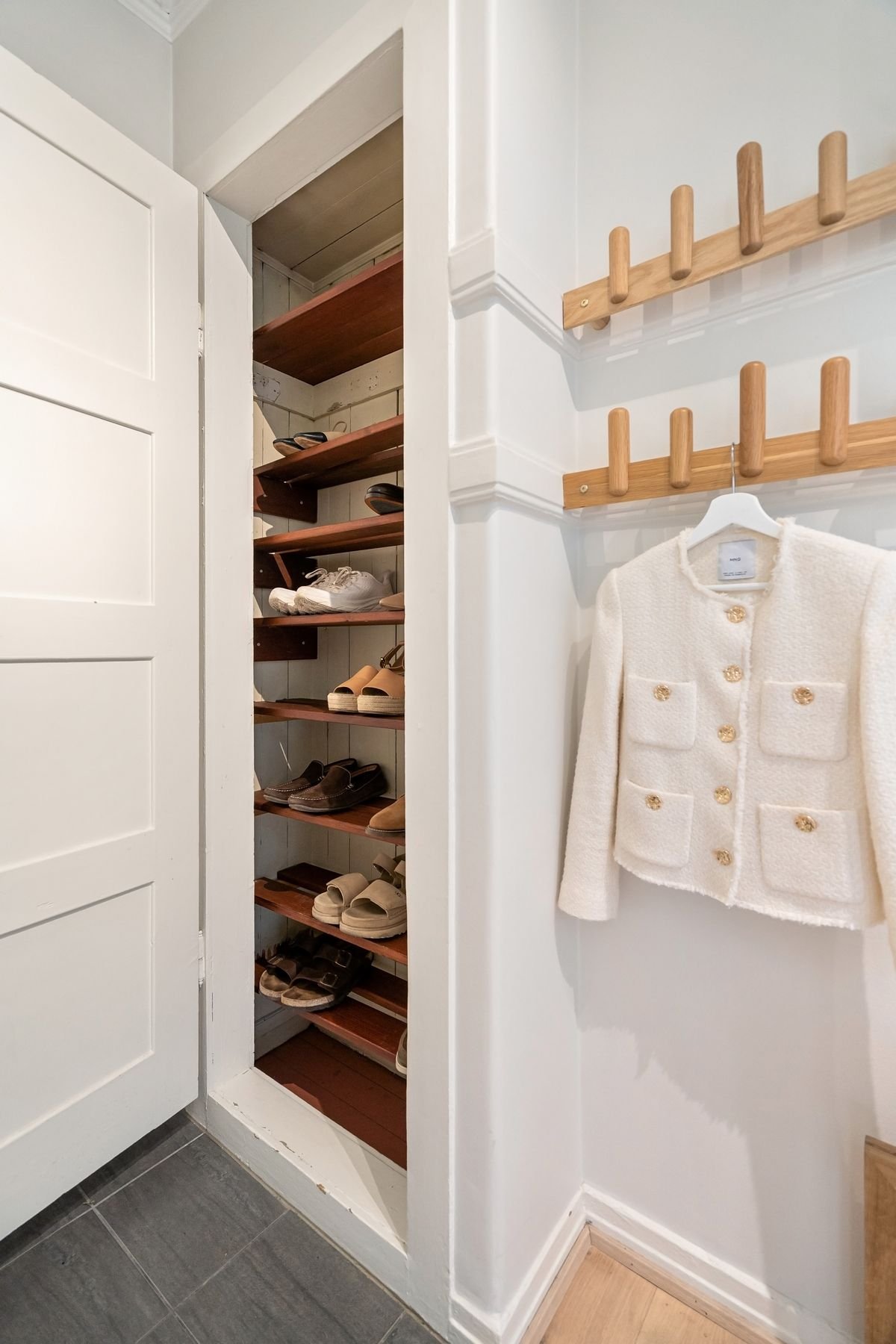
Place hooks at different heights if you have kids — lower hooks they can actually reach, higher hooks for adults. Stagger the hooks instead of lining them up in a straight row, so bulky winter coats do not crowd each other. Choose hooks strong enough for a heavy bag: a hook rated for 15 to 20 pounds will hold a winter coat and a backpack without pulling out of the wall. Always screw hooks into a wall stud when you can, or use proper wall anchors in drywall.
A peg rail is a step up from individual hooks — a long strip of wood with pegs along it that you can mount in an afternoon with basic tools. If you are new to hanging things on walls, our guide on the 10 essential tools every new homeowner should own covers the drill, level, and stud finder you will need. Keys deserve their own spot too: a small key rack or a few tiny hooks by the door means keys are always in the same place.
Entryway Storage Ideas for Small Homes: Benches, Baskets and Slim Furniture
A bench is the hardest-working piece of furniture in a small entryway. It gives you a place to sit while you put on shoes, and if it has storage underneath, it hides the shoes at the same time. When you are choosing among entryway storage ideas for small homes, a storage bench is often the single best purchase you can make.
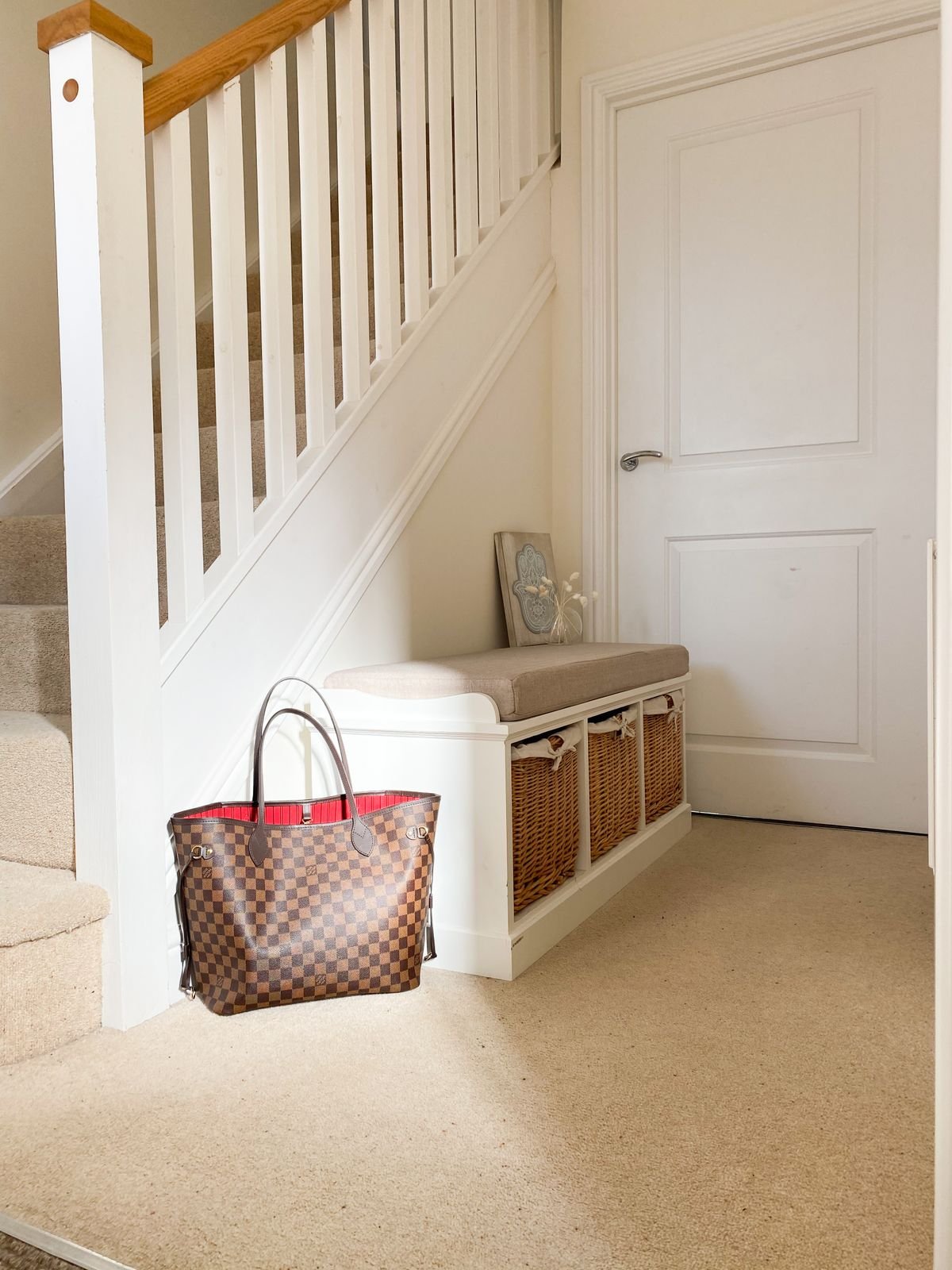
Look for a bench that fits your space with room to spare. Measure the width of the wall, then subtract a few inches on each side so the bench does not look squeezed in. A bench 12 to 14 inches deep is usually slim enough for a narrow hallway, and baskets or bins underneath keep shoes and winter gear out of sight.
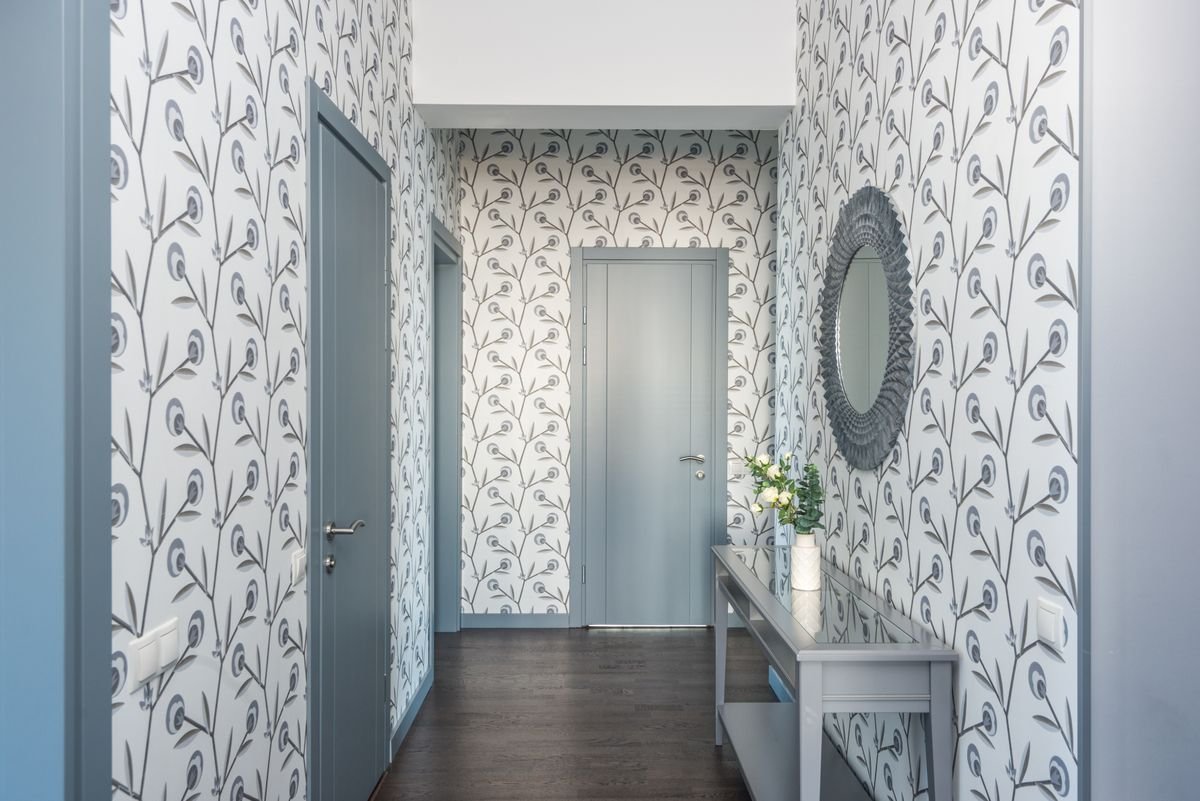
If a bench is too big, try a slim console table instead. A table 10 to 12 inches deep can hold a basket for keys, a small lamp, and a mail tray, with baskets underneath for shoes or scarves. Baskets are the unsung heroes of entryway storage ideas for small homes: a basket by the door holds scarves and gloves in winter, sports gear in summer, and the dog’s toys all year. Label the baskets if you share the house, and use matching baskets in different sizes for a coordinated look — three matching baskets look intentional and tidy, while three random boxes look like clutter that happens to be in baskets.
Entryway Storage Ideas for Small Homes: Renter-Friendly Fixes
Renters can use almost all of these entryway storage ideas for small homes without drilling a single hole. The key is choosing storage that stands on the floor or sticks to the wall without damage.
Freestanding coat racks are the classic renter solution. A sturdy hall tree — a coat rack with a bench and a shelf built in — gives you hooks, seating, and shoe storage in one piece of furniture that you can take with you when you move. Look for one with a wide, stable base so it does not tip when loaded with winter coats.
Adhesive hooks have improved a lot in recent years. The better ones hold several pounds each, come off cleanly, and work on painted walls, tile, and wood. Use them for keys, leashes, light jackets, and bags — but test one first with something light, and do not hang anything heavy or valuable from an adhesive hook. Tension rods are another renter trick: wedged between two walls in a small entryway nook, a tension rod becomes a hanging rail for coats or a support for a curtain that hides an open shelf. No holes, no damage, and it comes down in seconds. The Spruce has a helpful gallery of small entryway ideas with plenty of renter-friendly examples: https://www.thespruce.com/stylish-small-entryway-ideas-4121671
Entryway Storage Ideas for Small Homes: Final Checklist
- Measure your entryway and the door swing before buying anything; keep at least 30 inches of clear walkway.
- Count what needs a home: shoes, coats, bags, keys, mail, leashes, and seasonal gear.
- Set up one landing zone by the door for keys, mail, and the things you grab on the way out.
- Limit shoes at the door to two pairs per person; store the rest elsewhere.
- Use wall hooks or a peg rail for coats and bags, screwed into studs or with proper anchors.
- Add a storage bench or a slim console table with baskets underneath.
- Use the back of the door, corners, and high shelves for things you do not use every day.
- Choose renter-friendly options — freestanding racks, adhesive hooks, tension rods — if you cannot drill.
- Do a two-minute tidy every day and a five-minute reset every week; edit seasonally.
A small entryway does not need a big budget or a renovation to work well. Pick the two or three entryway storage ideas for small homes that solve your biggest headaches — usually shoes and coats — set them up this weekend, and let the habit do the rest. Coming home to a tidy entryway feels better every single day, and it all starts with a hook, a basket, and a spot for your keys.
Frequently Asked Questions
What are the best entryway storage ideas for small homes with no closet?
Start with wall hooks for coats, a bench or baskets for shoes, and a small shelf or tray for keys and mail. A freestanding hall tree combines all three in one piece of furniture, and over-the-door organizers add storage without drilling. These ideas work even when there is no coat closet at all.
How do I organize a very narrow entryway?
Keep everything shallow and wall-mounted. Use hooks and floating shelves instead of deep furniture, choose a bench or console no more than 12 inches deep, and keep the walkway at least 30 inches clear. Baskets under a slim bench hold shoes without blocking the hall.
How many pairs of shoes should I keep by the front door?
Two pairs per person is a good rule for small homes: the pair you are wearing and one backup. Store out-of-season and rarely worn shoes in a bedroom closet or a labeled box. Fewer shoes at the door means less clutter and a faster tidy-up.
What is the cheapest way to organize a small entryway?
Start free: declutter first, set a shoe limit, and assign every item a spot. Then add a few adhesive hooks and a basket or two — often under $20 total. A thrifted bench or a DIY peg rail can complete the setup for very little money, and these ideas cost far less than a remodel.
How do I keep my entryway tidy with kids?
Give each child their own low hook and a labeled basket at their height, and make the routine part of coming home: shoes in the basket, coat on the hook, backpack on its hook. Keep the system simple enough that a child can do it alone, and do a quick family reset once a week.